
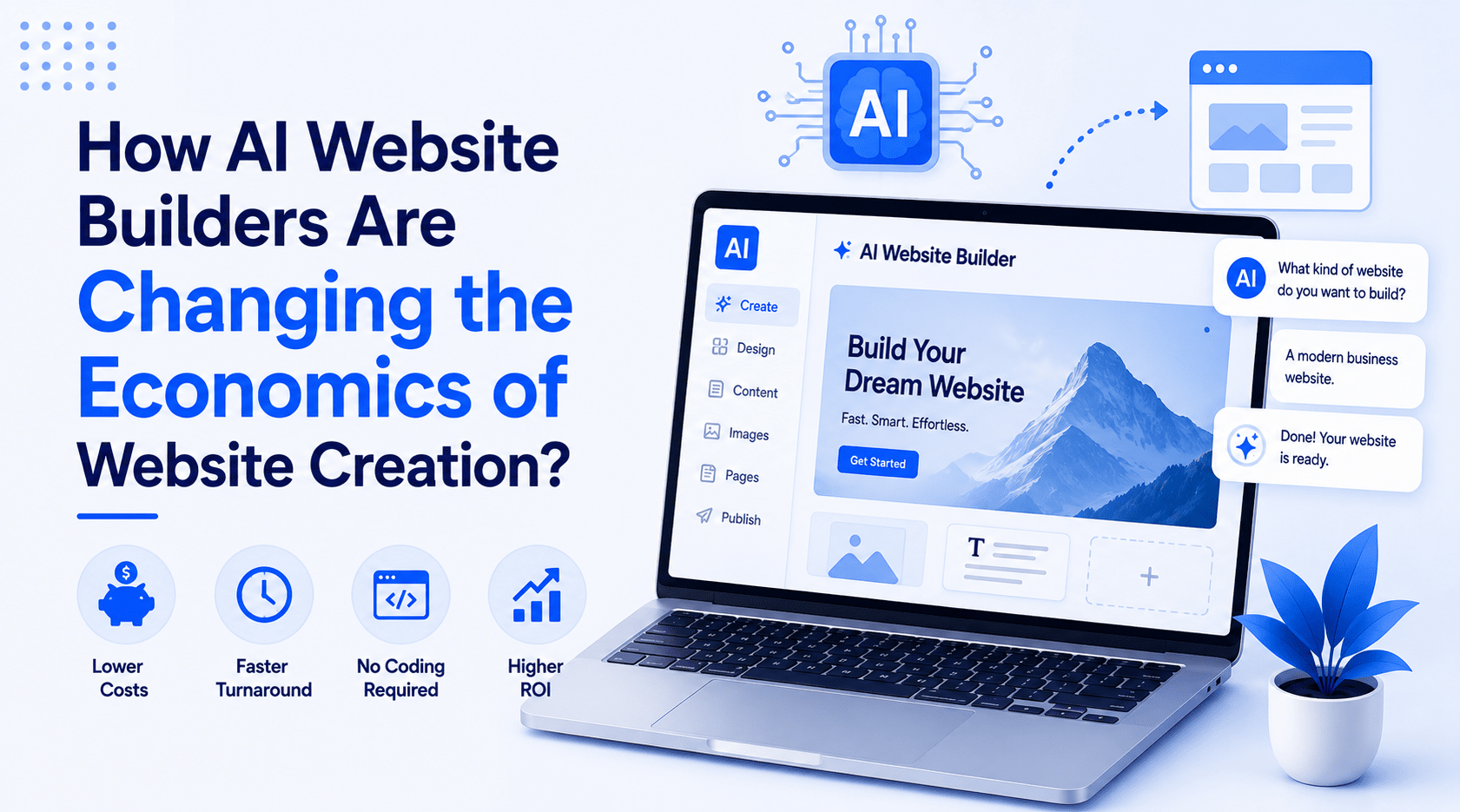
Website development pricing has shifted more in the last three years than in the previous decade combined. Freelance developers once charged anywhere between twenty and forty thousand of rupees for a basic multi-page website, and that cost kept many small businesses offline far longer than necessary. AI has changed that equation entirely.
A website builder for small business owners no longer means hiring a team or waiting weeks for a first draft. And for retailers exploring the cheapest ecommerce website builder India offers, the entry cost has dropped low enough that starting an online store feels almost risk-free. This shift affects more than pricing. It changes how quickly an idea turns into a functioning business.
What Made Websites So Expensive Before
Traditional website projects carried three separate costs: design, development, and ongoing maintenance. A business owner paid for each stage individually, often to different people entirely. Revisions meant new invoices. A single layout change could take a week to reflect on the live page.
Communication gaps added further delay. A design brief passed through emails and calls before a developer even began work, and misunderstandings often meant starting sections over. AI builders merged these stages into one workflow. Design and development now happen simultaneously, guided by the same tool a founder interacts with directly. That single shift removed the biggest expense: paying someone else to translate an idea into a working page.
How AI Changed the Pricing Model
Hosting providers used to sell website builders as a premium add-on, priced separately from standard hosting. Most providers now bundle these tools directly into regular plans at no extra charge. This shift alone has pulled the average setup cost down by a wide margin over the past two years.
MilesWeb reflects this trend clearly. Its hosting plans include an AI-powered builder at no extra cost, alongside features such as free professional email accounts and daily backups. A small business owner gets design tools, hosting, and basic operational support within one predictable monthly payment, rather than juggling separate vendors for each piece.
Ecommerce sellers benefit even more from this bundling. A product catalogue, payment gateway, and storefront design once required three separate vendors and three separate contracts. Many AI-powered platforms now handle all three within a single dashboard, cutting both cost and coordination time significantly for anyone launching an online store. This convergence explains why so many first-time sellers now treat a website launch as a weekend task rather than a month-long project.
Where Small Businesses Save The Most
Design work used to consume the largest share of any website budget. AI tools now generate layout options within minutes, based on the industry a business belongs to. That single change has reduced design-related costs by a considerable margin for most small businesses entering the market today.
A few areas show the savings clearly:
- Layout and template design, previously billed by the hour, now comes bundled with the builder itself.
- Copywriting suggestions reduce the need for a separate content writer during initial setup.
- Built-in hosting integration removes the cost of connecting a website to a server manually.
- Ongoing edits happen instantly through the dashboard, avoiding repeat developer fees for minor changes.
Each of these once represented a separate line item on an invoice. Today, they sit inside a single monthly subscription, which explains why smaller businesses are moving online faster than they did five years ago. The cumulative saving across these categories often determines whether a small business launches this quarter or postpones the decision entirely.
The Trade-Off Worth Understanding
Cheaper does not always mean identical to custom development. AI builders work best for standard business needs: a portfolio, a service page, and a small online store. Custom code still makes sense for unusual technical requirements or complex integrations a standard builder cannot support.
Most small businesses fall outside that category. A local bakery, a tuition center, or a boutique clothing store rarely needs functionality beyond what an AI builder already handles well. Businesses with complex requirements stay few, and even they often start with an AI builder before adding custom work for specific features later.
Choosing the right hosting partner still matters here. A provider like MilesWeb pairs its AI builder with dependable server performance, so a business owner doesn’t trade design speed for website reliability. That balance keeps the lower cost from becoming a hidden compromise later, particularly once traffic and customer expectations start to grow.
Concluding Insights
The economics of building a website have shifted in favor of small business owners for the first time in years. What once demanded a developer, a designer, and a sizable budget now fits within a single affordable plan.
A first-time entrepreneur can now launch a professional website without the financial strain that once came standard with the process. With providers like MilesWeb lowering that barrier, more small businesses can build an online presence on their own terms, starting sooner and spending less than they expected.